Seal type matched to what you are sealing and to the security level your carrier or customer specifies.
Sequential numbering and barcodes held consistent across reorders, so your seal log stays auditable over time.

Bolt seals, container seals and custom tamper-proof security seals for trailers and containers, supplied across Toronto, Mississauga and the Greater Toronto Area.
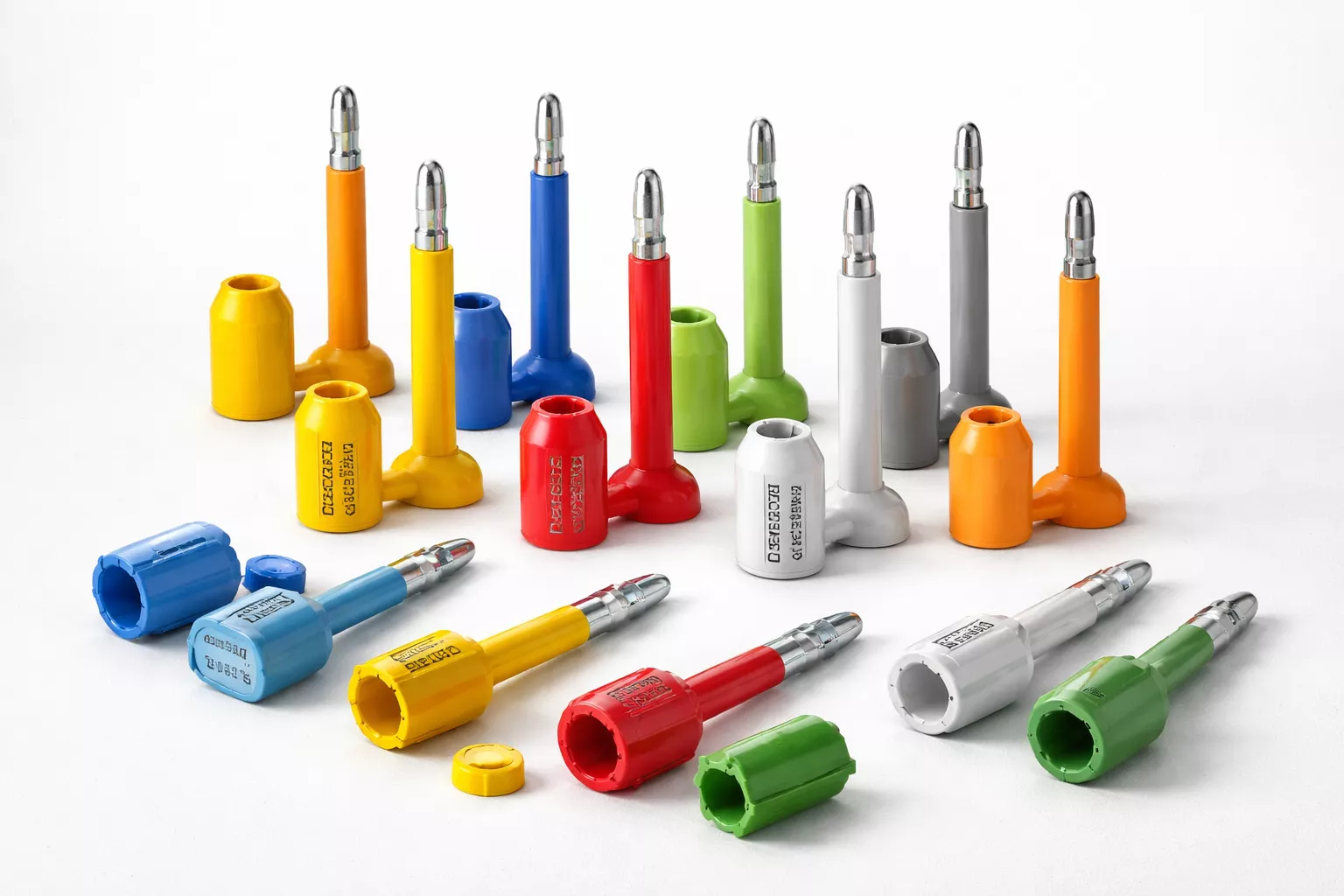
Bolt seals are the standard barrier seal for shipping containers, and security seals for containers leaving Ontario for export are usually specified by classification rather than by brand — send us what your carrier or customer requires and we will confirm what we can supply against it.
High-Security Sealing for Safe Cargo Transportation
Container / Bolt Seals are high-security sealing solutions designed to protect cargo, containers, and shipments during transportation and storage. These seals provide a strong and tamper-evident locking mechanism that helps ensure the integrity of goods throughout the supply chain.
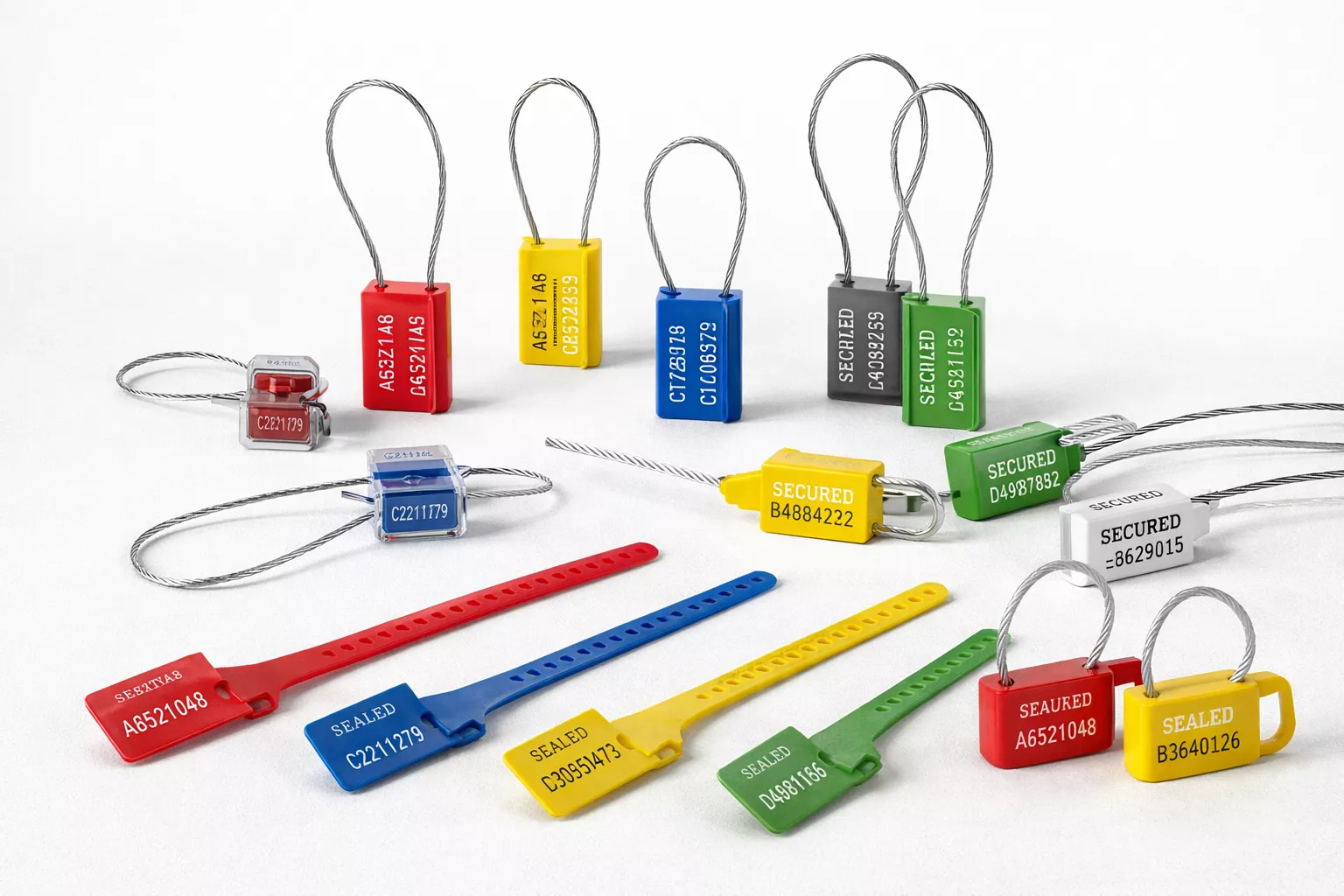
For fleets, trailer seal and cable seals cover most day-to-day sealing: a cable seal adjusts to awkward latch hardware, a padlock seal snaps on fast at the dock. As a the seal manufacturer and supplier we hold these in bulk, so a depot ordering thousands a year is not waiting on a special production run.
Reliable Tamper-Evident Sealing Solutions
Security Ties / Truck Seals are reliable tamper-evident sealing solutions used to secure trucks, trailers, containers, and cargo doors during transportation and storage. These seals help prevent unauthorized access and provide clear visual evidence if a shipment has been opened or tampered with.
Match the Seal to the Risk Level of Your Shipment
For basic tamper-evidence on lower-risk shipments — like a locked warehouse door or internal trailer — wire, plastic or padlock seals are usually sufficient and cost-effective. For shipping containers and higher-value or international freight, a high security bolt seal is the better choice, since it's built to resist cutting and forced entry rather than just show evidence of tampering.
If you need chain-of-custody tracking across multiple shipments, ask about custom sequential numbering on any of our seal types.
Selection guide
Two things narrow it down fast. If the load is a trailer, trailer security seals — cable or padlock — cover most daily sealing. If it is an export container or a high-value load, high security seals such as bolt seals are what carriers and insurers expect to see.
Seal choice comes down to what you're sealing, how much security you need, and whether the seal has to be cut with a tool.
| Seal type | Typical application | Security level | Removal |
|---|---|---|---|
| Bolt seals | Shipping containers, intermodal freight, export loads | High-security barrier seal | Bolt cutter required |
| Container / truck seals | Trailer doors, container doors, long-haul freight | High security | Cutting tool required |
| Cable / wire seals | Trailers, tankers, valves, irregular fittings | High security, adjustable length | Cable cutter required |
| Plastic the seal / security ties | Cash bags, totes, cages, utility meters, internal transfers | Tamper-indicative | Hand or scissors |
| Padlock seals | Trailer doors, bulk bins, roll cages | Tamper-indicative to high security by model | Snap or cut |
Seal types and typical applications. Tell us your application and volume and we'll confirm the right seal and numbering format. Barrier seals used in international freight are commonly specified against ISO 17712 classifications. Tell us which classification your customer or carrier requires and we will confirm what we can supply against it.
Customisation
We supply custom security seals with your numbering range, barcode and branding, and plastic security seals for lower-risk internal transfers where tamper evidence is the point rather than resistance. Buyers looking for a security seal manufacturer that also holds stock will find both here — and for security seals Toronto and GTA depots reorder monthly, the numbering range carries across runs.
Bulk buyers of seals Toronto-side and across Ontario usually standardise on one numbering range per depot or route, which is what makes a seal log readable six months later.
Seals do more work when they can be traced. Custom tamper-evident seals can be supplied with sequential numbering, company name or logo, barcodes for scanning at dispatch and receipt, and colour coding by route, depot or customer — so a missing or mismatched number is obvious before a load leaves the yard.
For high-volume logistics operations we supply in bulk with consistent numbering ranges across reorders, which keeps your seal log usable over time. Sealing bulk shipments? Combine seals with FIBC bags and stretch wrap for tamper-evident palletised loads.
Tell us the application, the security level your carrier requires and your annual volume — we'll recommend a seal type and quote numbered or branded options.
Reviews
Why Businesses Choose Us
Seal type matched to what you are sealing and to the security level your carrier or customer specifies.
Sequential numbering and barcodes held consistent across reorders, so your seal log stays auditable over time.
Process
Buying the seal is the easy half. What decides whether it protects you is the routine around it, and that routine is worth writing down before the first order.
Mixed ranges make a log unreadable within months and make a missing number hard to spot.
A number written on the paperwork but never checked at the far end tells you something went wrong, not when or where.
Unissued seals need to be as controlled as cash; loose boxes on a dispatch bench defeat the point.
A gap between the number on the door and the number on the paperwork is only useful evidence while the load is still traceable.
Barrier seals need the right cutter at the receiving end, or drivers improvise and the evidence is destroyed.
Tell us your annual volume, how many depots issue seals and whether a carrier or customer has specified a classification, and we will quote a numbering scheme along with the seals themselves.
For the seal types in detail, see our selection guide.
Send your specification and we'll come back with pricing and stock availability. The more detail you include, the faster we can quote accurately.
Standard barrier seals (like wire or padlock seals) primarily indicate tampering, while high the seals — such as bolt seals — are built to resist cutting and forced entry, meeting stricter standards (e.g. ISO 17712) for high-value or international shipments.
Container seals and bolt seals are the most common choice for shipping containers, offering tamper-evidence and, in the case of bolt seals, high resistance to cutting tools.
Our high security and bolt seals are designed to be tamper-evident and resistant to tampering, so any attempt to remove or bypass them is clearly visible.
Yes, we supply custom seals with sequential numbering and/or company branding for full chain-of-custody tracking.
Our high security bolt seals are designed to meet the strength and testing standards referenced in ISO 17712 for container security — contact us for specific compliance documentation on request.
Yes, we can typically arrange samples so you can test fit and security features before committing to a bulk order — reach out with your requirements.
Yes. Seals can be supplied with sequential numbering, barcodes, company branding and colour coding, with consistent numbering ranges maintained across reorders.
Trailer doors are commonly sealed with cable seals or padlock seals, while shipping containers and export freight usually call for a bolt seal. If a carrier or customer specifies a security classification, send it to us and we'll confirm what we can supply.
High tamper-evident seals such as bolt and cable seals are barrier seals that need a cutting tool to remove. Tamper-indicative plastic seals and security ties can be removed by hand and are used to show interference rather than to resist it.